Previews

Previews

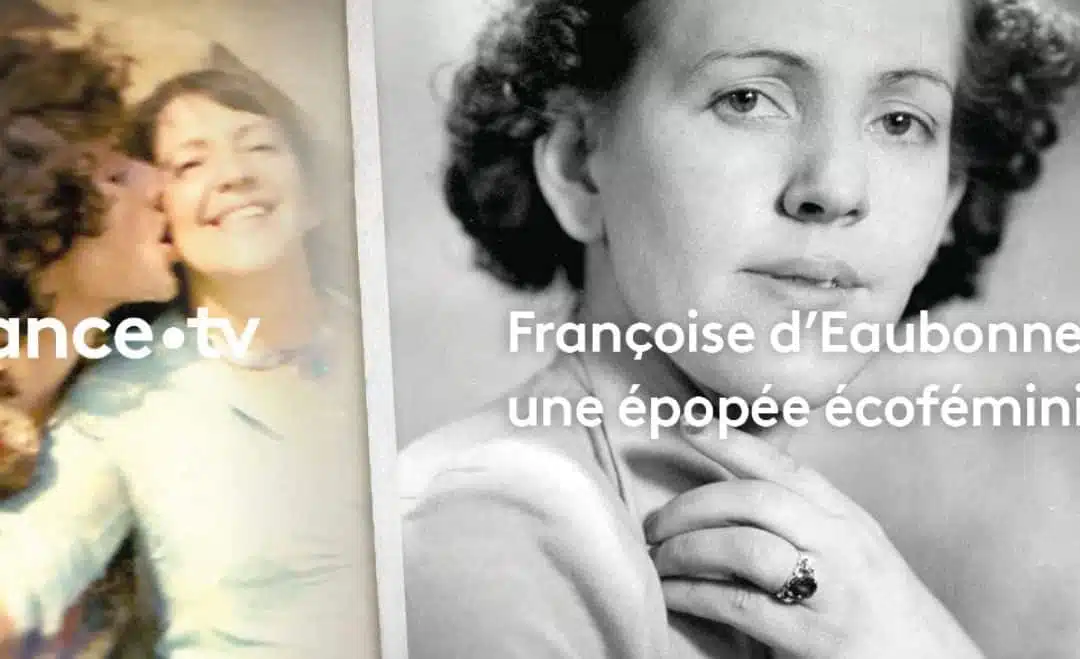
Director Manon Aubel has just completed a documentary: Françoise d’Eaubonne, une épopée écoféministe, a Sancho and Co and France Télévision co-production.

You are cordially invited to the previews, which are free of charge upon registration:

February 23 in Strasbourg, at the Cinémat Star, at 8 p.m. (information available at the cinema);


February 28, Nantes, Cinéma Concorde, 8pm.

The film will also be broadcast in the 2nd half of the evening on France 3 Région Pays de la Loire and France 3 Grand-Est on March 2.

Presentation:

In the 1970s, Françoise d’Eaubonne stood out in the French intellectual landscape. At the age of 50, the author had already won several literary prizes and published some forty novels and essays, but she was back with a vengeance in her militant fight. She was the first to define ecofeminism, denouncing the shared oppression of women and the planet as a consequence of patriarchy. She took part in the actions of the MLF (Mouvement de Libération des Femmes), created the FHAR (Front Homosexuel d’Action Révolutionnaire) and theorized counter-violence, going so far as to sabotage the construction site of the Fessenheim nuclear power plant.” (Translated with www.DeepL)
Phallocratic rabbitry

Phallocratic rabbitry

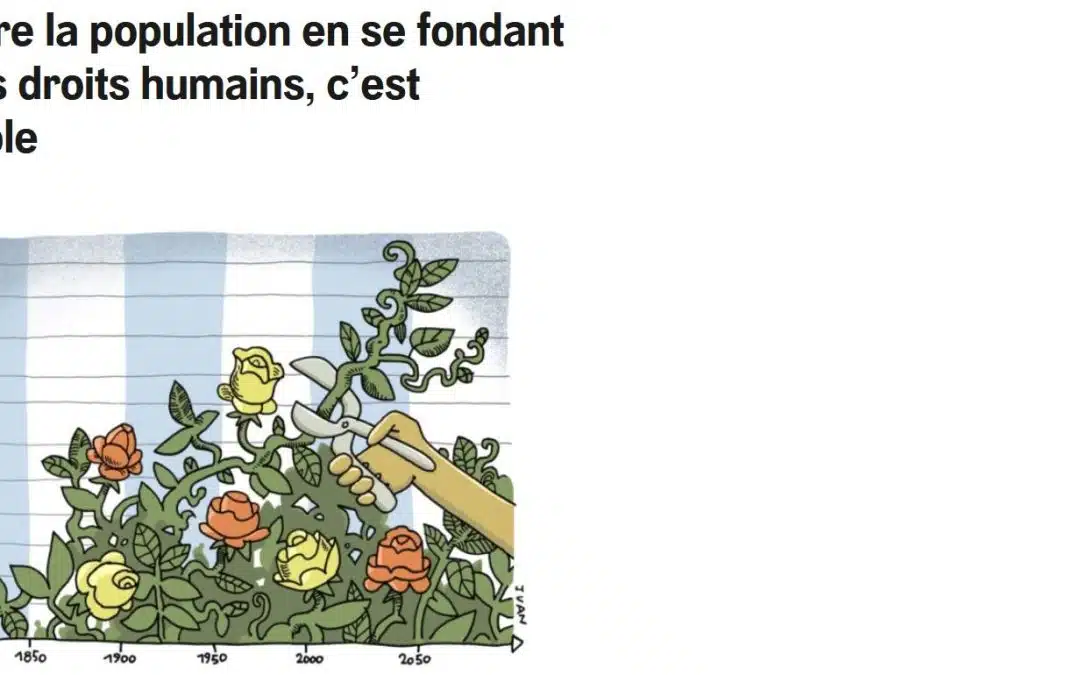
Part four of this interesting (as always) Reporterre dossier begins as follows:

We need to go on a “belly strike” and put an end to “phallocratic rabbitry”, as ecofeminist activist Françoise d’Eaubonne put it with her usual verve in Le Féminisme ou la mort. That was in the 1970s.

For example, Africa as a whole consumes less energy than Spain and accounts for just 3% of greenhouse gas emissions, even though its population is growing at an explosive rate. It should also be noted that Africa’s birth rate is falling much faster than it is in Europe, with huge regional disparities that make any global approach complex, if not ultimately false.

In line with Françoise’s argument, the fourth part demonstrates the primacy of women’s decisions in the birth rate through an astonishing counter-intuitive example: the case of Iran, which has undergone one of the most rapid demographic transitions in history, going from 6.4 children per woman in 1986 to 2.3 in 2003.

The reason for this is a profound change in mentality initiated during the seventeen-month Islamic revolutionary days in 1979, in which women played a major part, and the proactive policies of Khomeini’s time, during which contraceptive methods and the possibility of tubal ligation and vasectomy were made available to the population.

Successive governments have gone in the opposite direction, but nothing has changed; for Iranian women, having more children is no longer an option, and the birth rate is not rising again..

Françoise, who has rightly been very concerned about the fate of women in this country, would be astonished. She would see in it a power of resistance in one of the worst patriarchal regimes on the planet, and certainly a sign of hope. (Translated by DeepL)

All Power is evil!

All Power is evil!

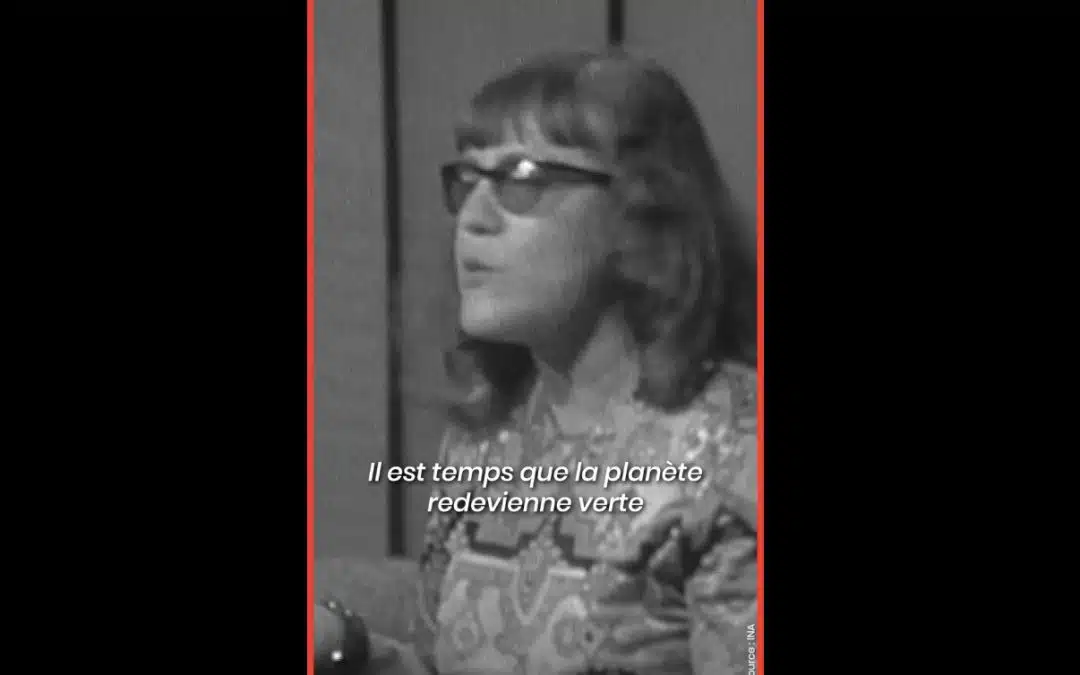
What verve, what spirit! A long-standing feminist who was recently alerted to man’s insane exploitation of nature, Françoise vituperated: “All power is evil in anyone’s hands!” For her, it was a question of taking power to destroy it, not to exercise it, in order to fight against “all the scourges that threaten humanity”.

How sweet it is to hear her outrage and revolt on May 3, 1972, in Aujourd’hui Madame, the first afternoon program on French television. I must confess, I’m particularly moved by this extract.

Françoise in America

Françoise in America

The site goes international. An English-language version was quickly added. 35 years after her trip to the USA, Françoise returns.

At the helm are two fellow leading American academics: Danielle Roth-Johnson, head of the Gender and Sexuality Studies department in Las Vegas, who met Françoise in the late ’80s and integrated her work into her teaching cycle, and Ruth A. Hottel, professor emeritus of French at the University of Toledo and translator of Le Féminisme ou la Mort, recently released by Verso Books.

Thanks to this translation and the work on the website, a whole new world is gaining access to Françoise’s thinking. Articles are multiplying in Scandinavian countries, Indonesia, Japan, and surely in many other parts of the world without us even knowing it.

Many thanks to Carolyn Merchant for agreeing to preface the English version of the site, as she has worked tirelessly over the last ten years to bring Françoise to life in translation.

One day, perhaps, a Hispanic version?

Shooting

Shooting

Journalist Manon Aubel has begun shooting a documentary on Françoise d’Eaubonne’s 70s. During this pivotal decade, the author published several novels and important feminist essays, helped found the Front homosexuel d’action révolutionnaire, became aware of the damage caused by the mistreatment of living beings, undertook a number of hard-hitting actions, and never ceased to speak out against all kinds of injustice.

The documentary will be broadcast later this year on France 3 Pays de la Loire.
(Translated with www.DeepL)

50 years ago, in San Remo

50 years ago, in San Remo

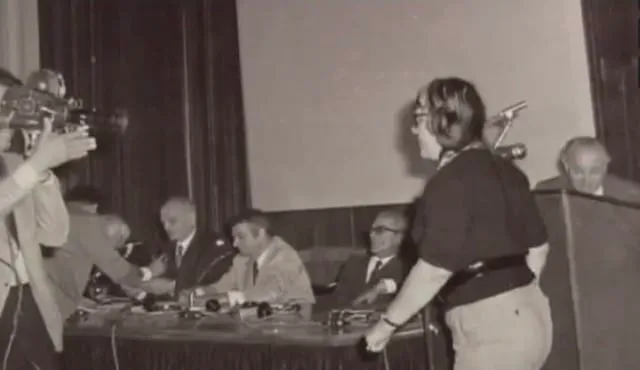
On April 5, 1972, Françoise and a score of activists from the French, Belgian, Dutch, Norwegian and British homosexual movements, including her companion Marc Payen, went to San Remo to join their FUORI comrades in sabotaging the first International Congress of Sexology. The psychiatrists intended to focus on “deviant behaviors in human sexuality”, i.e., on homosexuality as a mental illness. While the protest went unnoticed in France, it was widely reported in the Italian media.

On the placards carried by the activists were slogans such as :

  • Psychiatrists, we’ve come to heal you;
  • Normality doesn’t exist;
  • Psychiatrists, plant electrodes in your brain;
  • First and last sexophobia congress.

On the occasion of the 50th anniversary of the emergence of gay protest in Italy, a number of events and meetings are being organized: conferences, LGBT+ prides, podcasts…

Francesco Lepore, journalist, author and researcher into Christian spirituality in medieval and modern times, revisits this founding episode of the Italian gay movement in an article in Italian published in Linkiesta, in which he highlights “the admirable intervention of Françoise d’Eaubonne” and recalls “the famous speech by the poetess and ecofeminist”.

She gave an admirable fifteen-minute speech, like a true Amazon.

We also recall the testimony of Marie-Jo Bonnet (MLF and FHAR activist) and other participants in the sabotage of this congress, which can be followed on vimeo.