
The traces
biography
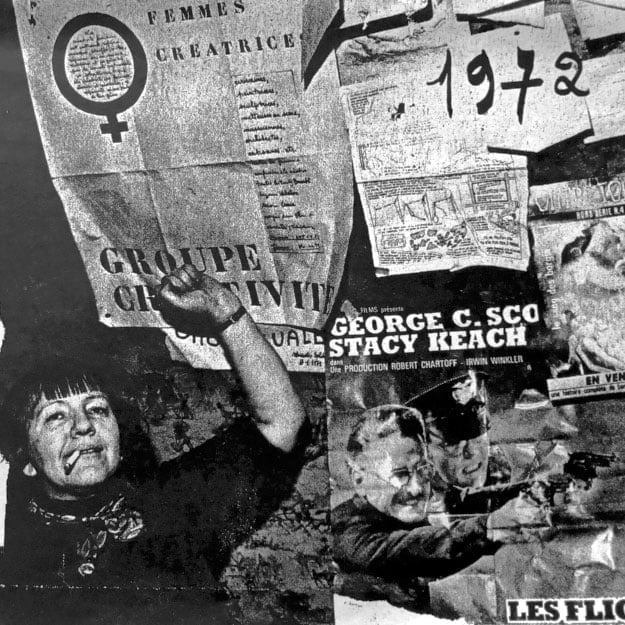
The Pen and the raised Fist
Without the support of a personal fortune, a man, or an institution, Françoise spent the century as a writer, fully engaged in the literary and political struggles of her time.
12 mars 1920
Françoise Marie-Thérèse Piston d’Eaubonne was born in Paris, the third of five children of Étienne and Rosita Mariquita (née Martinez Franco) Piston d’Eaubonne. On her mother’s side: of Castilian descent; her maternal grandfather was a Carlist refugee and, therefore, a royalist. On her father’s side: a very old French family whose first documented origins date back to 1082.

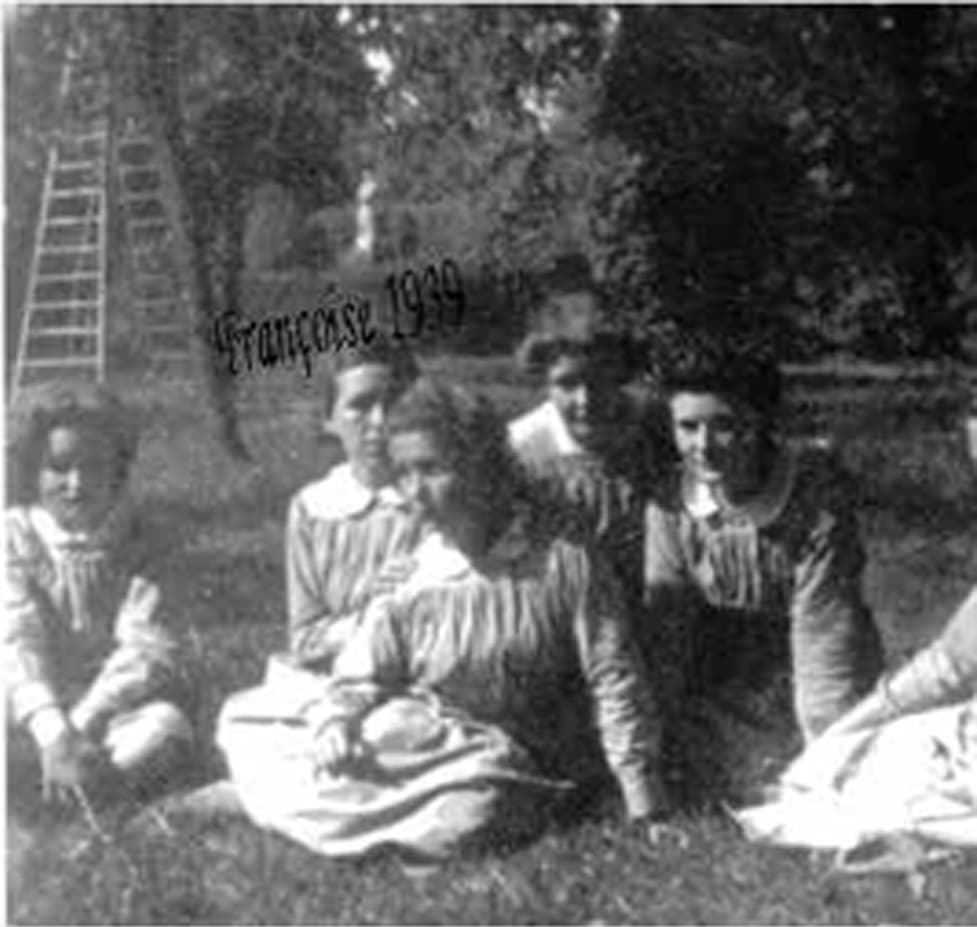
1920s–1935
She had a happy early childhood, though her later years were more difficult. Her father, who returned from the trenches in 1916 suffering from gas poisoning, struggled to support his family, and her mother gave up a career as a mathematician. Françoise won a short-story contest for children under 13. The entry requirement was 200 lines, but she submitted the 225-page manuscript of Mireille, Fille des montagnes. Colette published it and encouraged her.
1940
In 1938, with her high school diploma in hand, she enrolled in law school and art school. In 1940, to make ends meet, she took a job as a schoolteacher on the outskirts of Toulouse, where her mother was working. In 1942, she published *Les Colonnes de l’âme*, which brought her into contact with resistance networks. Her publisher, Jacques Aubenque, would become the father of her daughter Indiana, born in 1944.
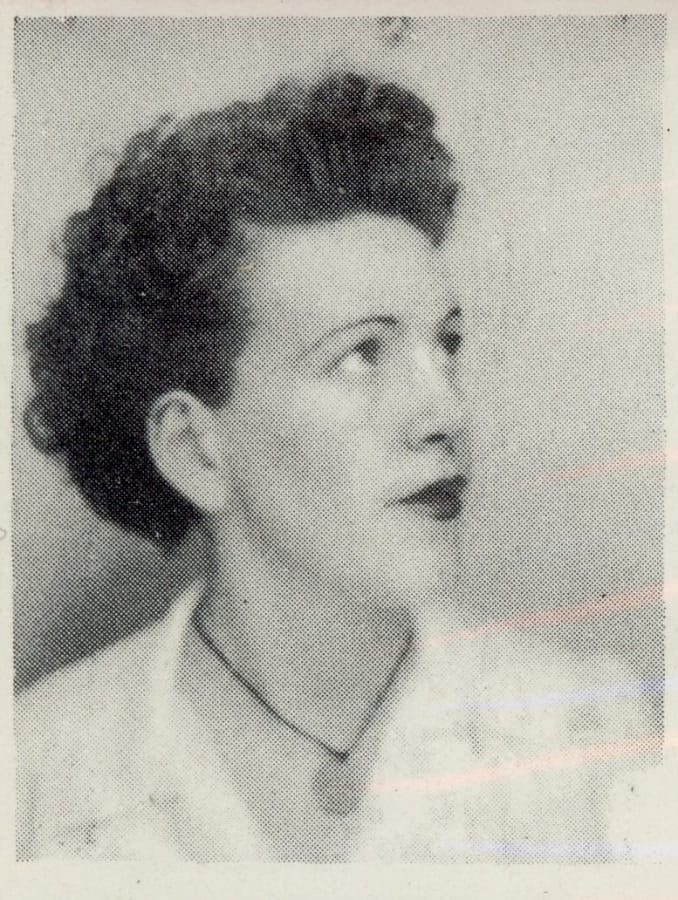
End of the War and Liberation
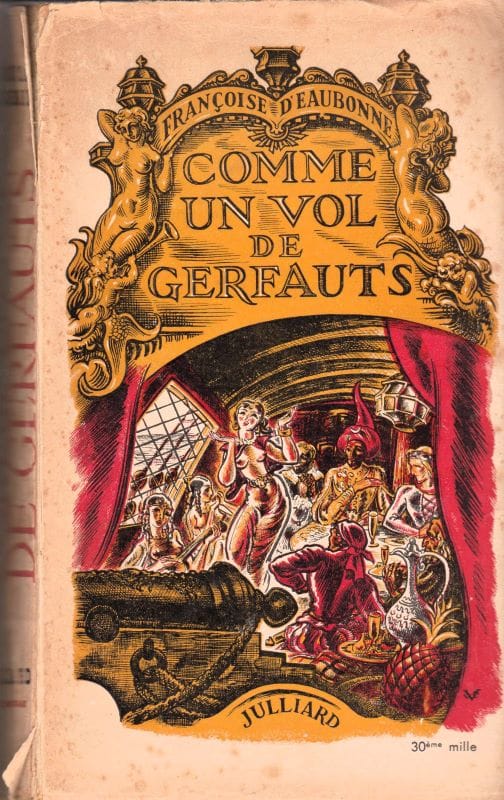
At the Lyon-Perrache train station in 1945, Françoise, weakened by deprivation, helped carry camp survivors on stretchers—an experience that would leave a lasting mark on her. She renounced the faith of her childhood and joined the Communist Party in 1946. Julliard published her first novel, Le Cœur de Watteau, which was followed by several others, including the bestseller Comme un vol de gerfauts, winner of the 1947 Readers’ Choice Award. Françoise continued to publish with Julliard until 1966, contributing to the publisher’s growth while also working there as a reader.
1949
Simone de Beauvoir publishes Le Deuxième Sexe. Françoise writes to her:
– You’re a genius! … We’ve all gotten our revenge!
After a first meeting, they lose sight of each other and will meet again four years later. Elle resteront amies jusqu’à la mort de Simone de Beauvoir en 1986.


1951
Julliard publishes her first feminist essay, Le Complexe de Diane, in defense of de Beauvoir’s book. A renowned novelist, Françoise tackles in this work—through flashes of insight and often visionary analyses—the themes she would explore throughout her life: patriarchy, Eros, gender, and feminism, as Élise Thiébaut notes in her excellent preface to the book’s reissue by Julliard in October 2021.
1956
Françoise left the Communist Party because she disagreed with its stance on Algeria, which she felt was not anti-colonialist enough. The party’s lack of regard for women at that time also played a role in her decision. That same year, she published The Passionate Life of Arthur Rimbaud, following eight other publications since 1951.

1958
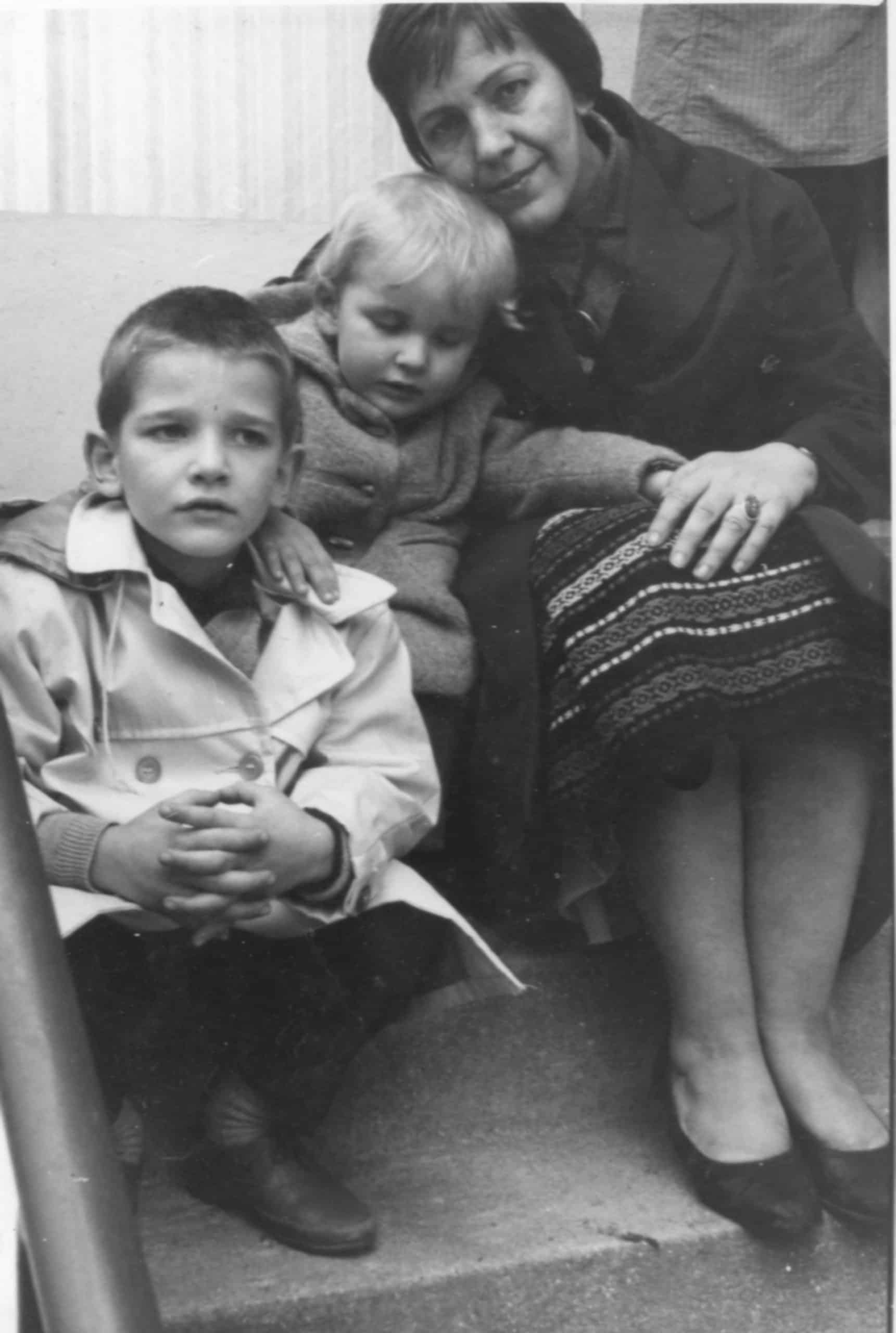
Publication of Fort des femmes and, in the Bibliothèque Verte series, Chevrette et Virginie—two novels that, like Indomptable Murcie (published in 1949), are part of a long line of novels featuring female protagonists. Birth of her son Vincent; father unknown.
1960
Signing of the Manifesto of the 121 in support of the right to refuse to serve in the Algerian War. That same year, Françoise published three books: The Passionate Life of Verlaine and Verlaine and Rimbaud, or the False Escape, and Le temps d’apprendre à vivre.

1964
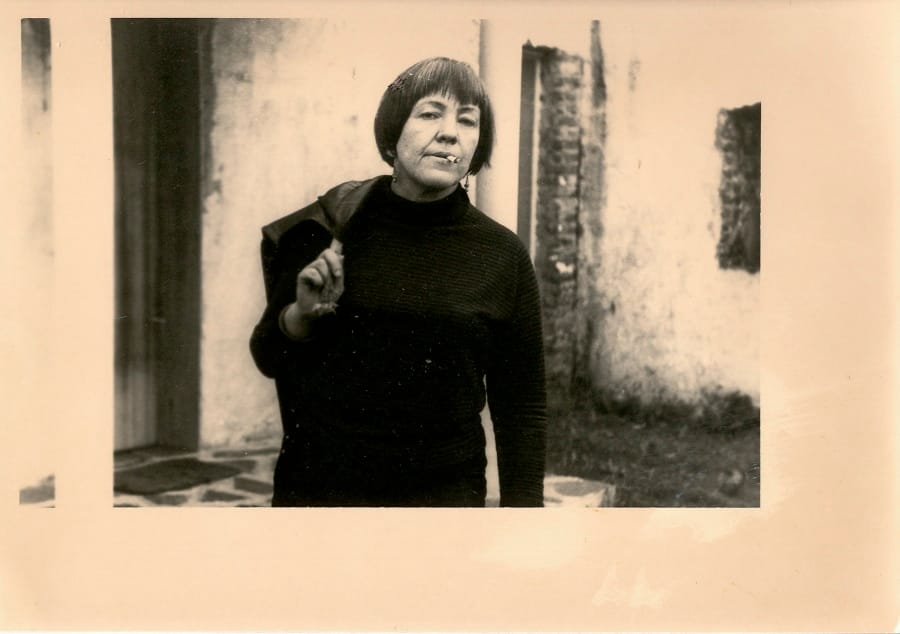
Publication of the first volume of her memoirs, *Chienne de Jeunesse* (since Julliard had rejected her original title, *Putain de jeunesse*). The second volume, *Les Monstres de l’été*, recounts her painful love affairs, travels, and political activism during the 1950s and 1960s. It was published in 1966. These two volumes were later compiled, along with two other memoirs, into her autobiography published by Dagorno in 2000. Since 1960, she has published no fewer than sixteen books: science fiction novels, biographies, children’s books…
1970
In May 1968, Françoise took part in the occupation of the Théâtre de l’Odéon in Paris and was seen on the barricades. In 1970, she published *Éros minoritaire*, a book on the history of homosexuality. During the previous six years, she had published less frequently—only six books, including *La Couronne de sable*, a biography of Isabelle Eberhardt.

1971
Joining the Women’s Liberation Movement (MLF) when it was founded, Françoise signed the “Manifesto of the 343” in support of abortion rights. She co-founded the Homosexual Front for Revolutionary Action (FHAR). She never published a book, devoting herself day and night to her causes.
1974
Françoise coined the term “ecofeminism” and developed the concept in her seminal essay *Feminism or Death*, a title that alludes to René Dumont’s book *Utopia or Death*. She founded the Front Féministe, which would later become Écologie Féminisme Centre. She met Alain Lezongar (age 20), who would stand by her until the very end and whom she wished to adopt.


1976
Putting her words into action, Françoise—as part of her anti-prison activism—married inmate Pierre Sanna at Fresnes Prison to protest his murder conviction. More than 40 years later, it would come to light that she had claimed in her private writings to have participated in 1975 in the bombing of the Fessenheim nuclear power plant, which was under construction at the time.
1977
Publication of the essay *Women Before Patriarchy*, in which Françoise summarizes current knowledge on the role of women in the evolution of the species and proposes a hypothesis regarding the time period and mechanism by which patriarchy was established.


1978
It was a prolific year for Françoise, who published five books, including *Ecology/Feminism: Revolution or Transformation?*, *The Shepherdesses of the Apocalypse*, and *Counter-Violence: Resistance to the State*. She also published *The Network Indicator*, an autobiography structured not along a timeline but according to spatial coordinates. This innovative form will be the subject of a dissertation in Australia.
1983
Françoise embarked on an adventure in independent radio. Until the late 1980s, she hosted literary and political programs on several Parisian stations, primarily on Radio Mouvance—an “anti-racist, anti-imperialist, and anti-Zionist” station founded by Roland Fornari.

1986
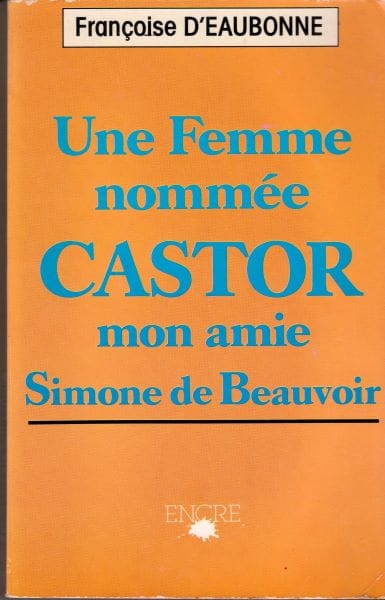
The death of her friend Simone de Beauvoir inspires Une femme nommée Castor , which appears in November. En 1984 et 85, she had published the two volumes of *The Funeral of Jean-Paul Sartre*, along with six other works, including *The Dark Amazon* and *Louise-Michel, the Kanak Woman*.
1990
Following the disappearance of Pastor Doucé, Françoise sets up a Committee to establish the truth. Three months later, we find the pastor murdered in the forest of Rambouillet. She had *The Scandal of a Disappearance: The Life and Work of Pastor Doucé* published. But publishing is no longer so easy for her, and her writing takes on a meditative and sometimes dark tone.


1992
Publication of *All the Mermaids Are Dead*. This novel, which she is particularly fond of, was well received; its twilight atmosphere is truly captivating. How much of herself is reflected in this novel, written at a time when she was struggling with feeling invisible?
1997
During this period of quiet reflection, Françoise took a step back, which led her to publish that same year *Féminin et Philosophie, une allergie historique* (Women and Philosophy: A Historical Allergy), as well as *La Liseuse et la Lyre* (The Reader and the Lyre), a magnificent meditation on what has largely defined her life: writing and reading.


2000s
Françoise published *The Sexocide of Witches* in 1999, arguing that these unjust trials were nothing more than a specious pretext for subjugating and condemning not the witch, but women above all. In 2002, she reflected on our future in Does the Man of Tomorrow have a future? How long will the 21st century last? In 2003, it will be L’Evangile de Véronique, who confronts the regime of the Fathers. In a final public outcry against the detested patriarchy.
3 août 2005
Having put down her pen just a few days earlier, the woman whose motto was “Not a day without a line” passed away in her apartment for artists in need on Rue du Montparnasse in Paris. She left us more than a hundred books, three new words for our language, and a brilliant insight that is now celebrated after a long period of obscurity. Sensing that she would be recognized after her death, she confided to us shortly before her passing that she had led a somewhat failed but joyful life, and that she was not upset to leave this world in light of what was to come—though she regretted leaving it in such a state.
